Structural Drying in Boston, MA
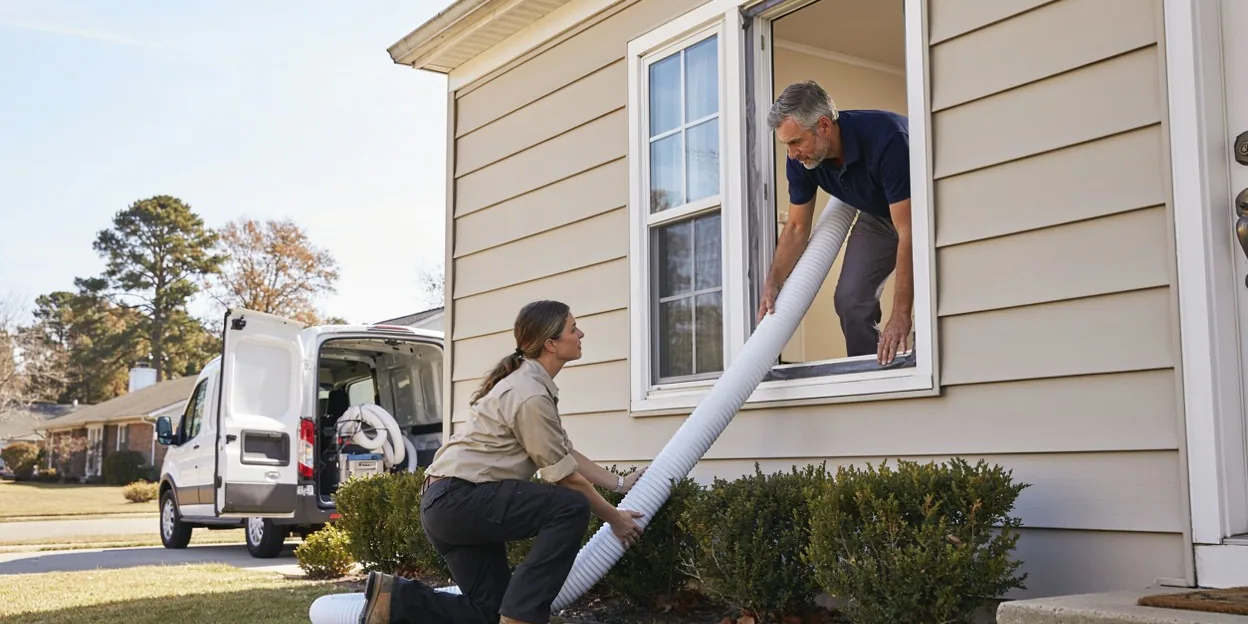
The plumber fixed the pipe on Tuesday and you spent the evening with towels and a shop vacuum. By Friday the floor looks fine, but the baseboard has a bubble in the paint, the room smells like a wet cellar, and the plaster under the window feels cool to the touch. Call us now and tell us what you see. An independent local provider who does structural drying in Boston and the inner-ring cities takes it from there.
What the crew does first
The crew meters everything before turning on a single fan. Plaster and lath, the bottom of the studs, the subfloor, the joists below, the sill plate in the basement. In a triple-decker or a rowhouse the readings often run down through a wall cavity to a floor you did not think was involved. A thermal camera speeds up the search, and the meter confirms what the camera suggests.
Then the equipment goes in. Air movers push dry air across the wet surfaces so moisture leaves the material. Dehumidifiers pull that moisture out of the air so it does not settle on the next wall over. Where a wall cavity is wet but the plaster is sound, the crew may drill small holes at the base and dry the cavity from inside rather than tearing the wall out. Readings are taken every day, and the equipment moves as the numbers change.
What to do in the next hour
Leave the equipment running once it is placed, even when it is loud. Keep doors to the drying area closed if the crew asks, and keep windows shut. A Boston summer afternoon at 80 percent humidity does not dry a wall; it does the opposite.
Do not paint, caulk, or put the baseboard back until the readings are done. Closing up a damp assembly hides the problem and gives mold a sealed, dark place to start. If the room feels muggy while the machines run, that usually means moisture is leaving the walls and the dehumidifier is catching up.
What is usually saved and what is not
Framing, subfloor, joists, and sound plaster on wood lath dry in place more often than people expect, especially in a house built before 1930 where the studs are true two-by-fours of old-growth wood. Hardwood floors that are cupped but not buckled can often be dried flat with mats.
Wet insulation, swollen particleboard, carpet pad, and drywall that wicked more than a foot or so usually come out. Old plaster that has gone soft and separated from the lath is not coming back. Ask the crew which reading led to each decision. If the water is still on the floor when you call, the job starts with water extraction, and drying follows.
Suffolk County notes: drying a hundred-year-old house
The housing stock around Boston is plaster on wood lath, horsehair in the older mix, over balloon framing that runs from the sill to the attic without a fire stop. Water poured into a second-floor wall in that framing can run all the way down to the basement. The crew has to meter the floors below the leak, not just the room where it happened.
Basements make the second problem. A fieldstone cellar under a house in Roxbury or Medford sits at 70 percent humidity most of the summer on its own, and a dehumidifier that is fine for a dry slab house upstate will not keep up. Drying targets in a cellar are set against what the space can hold, and the crew may recommend a permanent dehumidifier when the job is done. A pipe that froze and ran in an outside wall, common after the February 2023 cold snap, means the whole wall cavity and the sill below are wet, and frozen pipe cleanup usually leads into a longer drying plan.
Insurers generally expect the drying to be documented. Ask for the daily moisture log and the equipment list; it is the record that shows the house was dried and not just aired out.
Calling about structural drying
Say when the water came in, when it was stopped, and which rooms and floors got wet. Mention plaster walls, hardwood floors, a finished basement, or a cellar that already smelled damp before the leak. Call (857) 524-9927 now and tell us what you see.